Jan 26 is a Day of Mourning
Organised by the Aborigines Progressive Association and led by Jack Patten and William Ferguson, in 1938 Aboriginal people declared 26 January a Day of Mourning.
While the official celebrations rolled on across the city, they marched silently through Sydney, then gathered for a conference at Australian Hall, a meeting for Aboriginal people only.
Around a thousand people took part across the day, many dressed in black to mark their grief. Leaders like Pearl Gibbs and Margaret Tucker were among them, women who were central to the movement and whose names deserve to be remembered alongside the men.
It was the first time Aboriginal activists from different states had come together to organise on this scale, and it became one of the first major civil rights gatherings anywhere in the world. Historians point to it as the beginning of the modern Aboriginal rights movement.
And here's what many people don't realise. 26 January was first declared a Day of Mourning in 1938. Yet it wasn't until 1994 that 'Australia Day' on 26 January became a public holiday across every state and territory, fixed to that date. The protest came first. The public holiday came more than 50 years later. The tradition of resistance runs deeper than the current tradition of celebration.
"On this day the white people are rejoicing, but we, as Aborigines, have no reason to rejoice on Australia's 150th birthday... We refuse to be pushed into the background. We have decided to make ourselves heard."
— Jack Patten, opening address, Day of Mourning, 26 January 1938
This was never simply a day of grief. It was a demand. And it was never meant to be a one-off. Yorta Yorta Elder William Cooper, founder of the Australian Aborigines' League, alongside other leaders in the movement, made sure of that. From 1940, the Day of Mourning was marked every year on the Sunday before 26 January, and in time it grew into what we now know as NAIDOC Week.
We want to reclaim this day. That starts with moving the public holiday off 26 January, and it's why we're calling for the Australian Long Weekend, a national holiday on the second last Monday in January. Everyone still gets the long weekend, and 26 January can be what our people declared it in 1938: a Day of Mourning and protest.

The 1938 Day of Mourning, told by a descendant
By Ngarra Murray, ABC News, 24 January 2018.
From Day of Mourning to NAIDOC
NAIDOC began as a day of mourning and grew into a celebration, and it carries both at once. Read how one day of protest in 1938 became 50 years of NAIDOC Week.


Wear your values
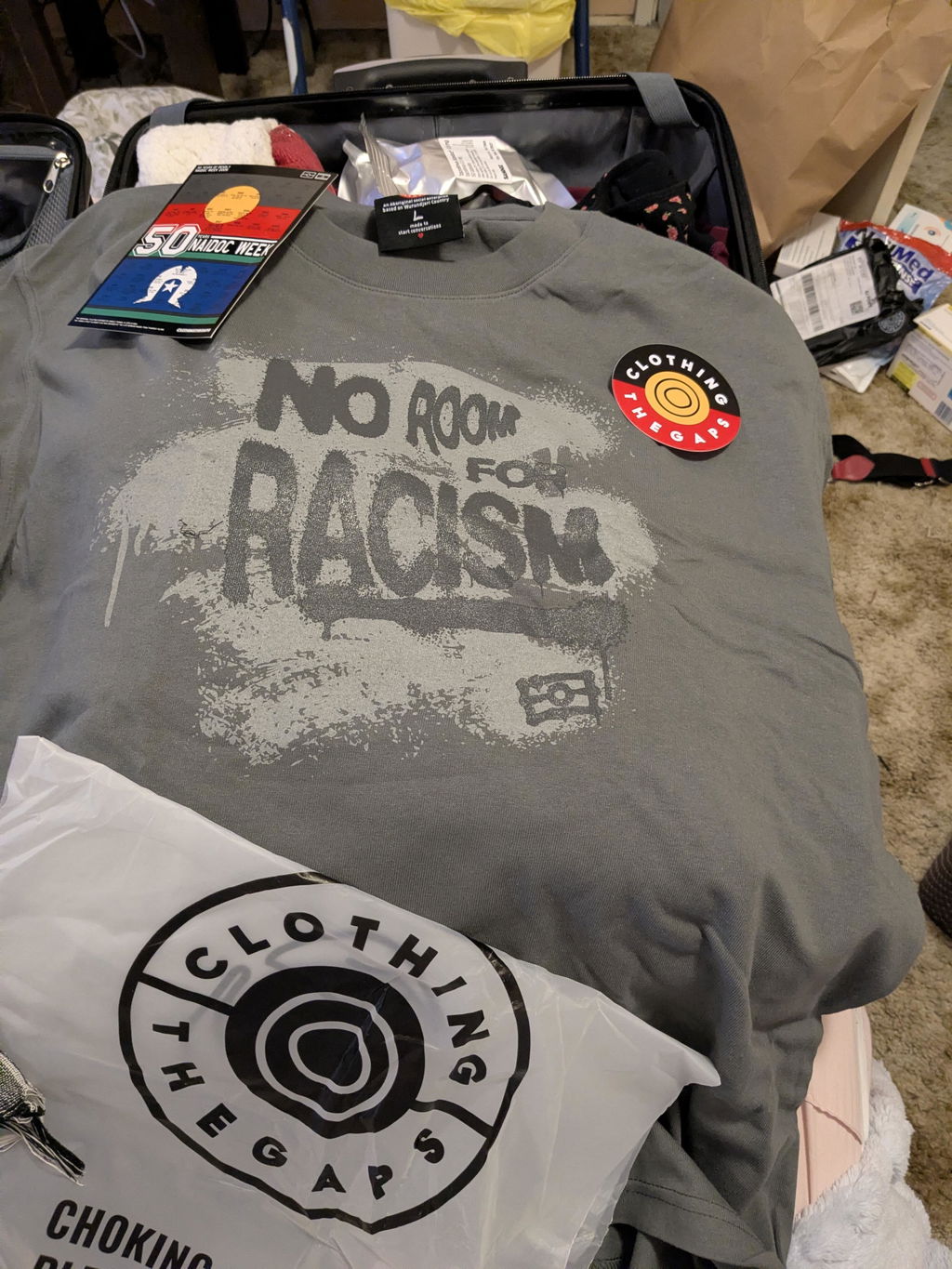
JAN 26 MERCH
Originally designed for January 26, this tee also applies to many other colonial dates throughout our calendar and moments in time when Truth-telling is not being centred. This tee recognises Australia’s violent past and all dates that First Nations people consider a day of mourning. This is a solidarity statement paying respects to the resistance and survival of First Nations people and highlights truth telling.